Cookie preferences

 Español
 Français
 Deutsch
 Italiano
 Svenska
 Nederlands
 Português
 Dansk
Dansk
 Polski
 Română
 български език
 Magyar
 Čeština
 Slovenščina
 Slovenčina
 Русский
 中文
中文
 ελληνικά
What do the black, red, green and white labels on Iberico ham actually mean? Spain's official colour-coded seals...


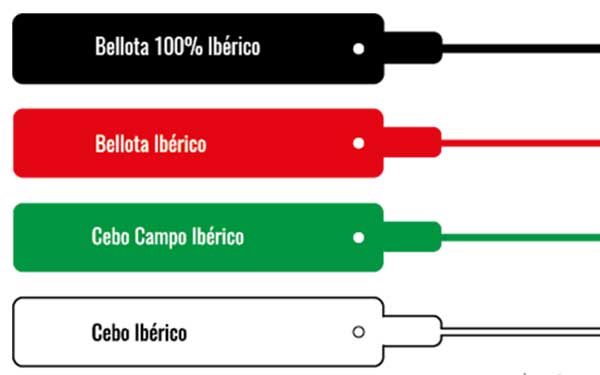
What do the black, red, green and white labels on Iberico ham actually mean? Spain's official colour-coded seals...
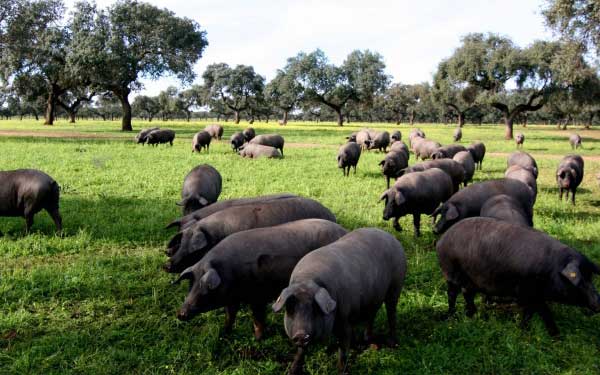
Iberian Bellota ham is one of Spain’s greatest gastronomic treasures. Produced from Iberian pigs raised free-range in...
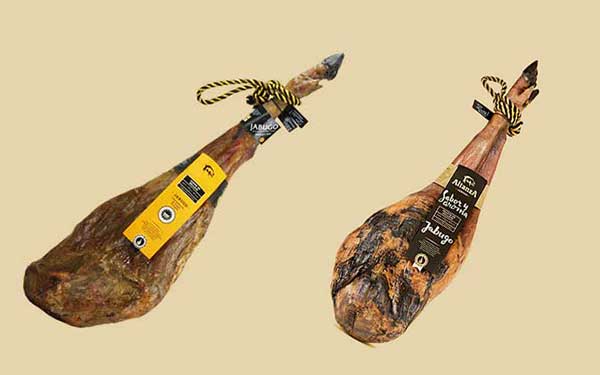
Iberico ham or Iberico shoulder: which should you choose? Although both come from Iberian pigs and follow similar...
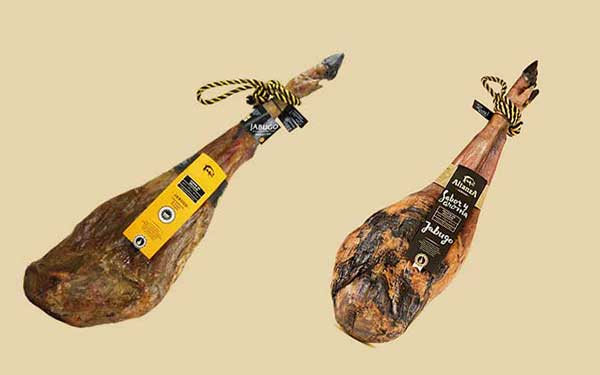
Iberico ham or Iberico shoulder? This is one of the most common questions when buying a whole Iberico piece. At first glance, the two products may seem very similar: both come from Iberian pigs, both can be Bellota, Cebo de Campo or Cebo, and both undergo traditional salting, drying and curing.
However, Iberico ham and Iberico shoulder are not simply two sizes of the same product. They come from different parts of the animal, and that affects their weight, proportion of fat and bone, usable meat yield, curing time, ease of slicing, flavour and final price.
One of the most important differences is that Iberico shoulder contains proportionally more fat and bone than Iberico ham. This is one of the main reasons why shoulder is usually cheaper to buy as a whole piece, although it also gives a lower meat yield.
The fundamental difference is anatomical.
Iberico ham comes from the pig’s hind legs, while Iberico shoulder comes from the front legs.
This difference influences almost everything else: size, weight, bone structure, fat content, amount of usable meat, curing time and flavour profile.
Each pig therefore produces two hams and two shoulders.
Because it comes from the hind leg, Iberico ham is naturally larger and heavier.
Depending on breed, category and producer, a whole Iberico ham will often weigh around 7 to 9 kg, although lighter and heavier pieces also exist.
An Iberico shoulder is smaller and commonly weighs around 4 to 6 kg.
This size difference matters when choosing a whole piece. For a household with moderate consumption, shoulder can be more practical because it can be finished sooner once opened.
Ham is often more suitable for larger families, regular consumption, celebrations or anyone who wants a larger quantity of meat.
This is one of the most important differences between the two products.
Iberico shoulder contains proportionally more fat and more bone in relation to its total weight.
Its anatomy is more compact and includes the shoulder blade, which occupies a significant part of the piece. The proportion of external and internal fat is also generally higher.
Ham has larger muscle groups and normally offers a higher proportion of usable meat.
This is why it can be misleading to compare ham and shoulder only by total price or even by price per kilo.
A shoulder may appear much cheaper, but the proportion that ultimately becomes slices is also lower.
There are several reasons for the price difference.
First, shoulder is smaller and lighter, so its total purchase price is naturally lower.
But that is not the only reason.
Shoulder contains proportionally more bone and fat, which means the yield in usable meat is lower.
It also generally requires less curing time because the piece is smaller and thinner.
This reduces the overall production time and helps explain part of the price difference.
A cheaper shoulder does not necessarily mean lower quality. A Bellota 100% Iberico shoulder, for example, can belong to a higher quality category than a Cebo de Campo ham.
The size of the piece directly affects the curing period.
Ham is larger and needs more time for salting, drying and maturation to develop evenly throughout the piece.
High-end Iberico hams, particularly Bellota Iberico ham, can easily be cured for more than three years and often reach around 36 to 48 months, depending on weight and producer.
Shoulder, being smaller, matures more quickly and therefore usually has a shorter curing period.
This does not mean it is less refined or lower quality. It simply reflects the smaller size and different structure of the piece.
Not exactly.
Iberico shoulder is often appreciated for a more intense, concentrated flavour. Its higher proportion of fat and more compact structure can give a richer and more powerful mouthfeel.
Iberico ham generally offers a wider range of nuances across the different parts of the leg, and its longer curing period can develop considerable aromatic complexity.
It would be wrong to say that one is always better than the other. They offer two slightly different eating experiences.
A common mistake is to confuse the cut with the quality category.
The main Iberico categories can apply to both ham and shoulder.
For example, you can find:
This means a Bellota 100% Iberico shoulder can belong to a higher category than a Cebo de Campo ham, even if the ham is larger and more expensive as a whole piece.
Yes.
The term Pata Negra is reserved for products that are Bellota 100% Ibérico and meet the requirements of the Spanish quality standard.
This applies to both ham and shoulder.
So there can be both Pata Negra ham and Pata Negra shoulder.
The important point is not to confuse the anatomical cut with the quality category.
If your priority is the amount of usable meat, Iberico ham generally gives a better yield.
Its larger muscles and lower proportion of bone in relation to total weight mean that more of the piece can be sliced and eaten.
Shoulder contains proportionally more bone, rind and fat.
This is why price per kilo alone can be misleading.
A 5 kg shoulder and an 8 kg ham do not provide the same percentage of edible product.
Proportionally, yes. Iberico shoulder generally contains more fat in relation to its total weight than ham.
That fat should not be viewed only as waste. In Iberico products, fat is fundamental to texture, juiciness and aroma.
In Bellota products in particular, intramuscular fat contributes to the characteristic marbling and melting texture associated with premium Iberico.
The amount of visible fat can vary considerably from one piece to another, even within the same producer and category, because it is a natural product.
For someone with limited carving experience, ham is generally easier to slice.
Its larger muscle areas provide broader cutting surfaces and allow longer slices before reaching the bones.
Shoulder has a more complex bone structure in relation to its size, so it usually requires a little more technique to carve efficiently.
This difference is no longer relevant if you choose a boneless product or ready-sliced packs.
How quickly you consume the product is an important consideration when buying a whole piece.
For a household that eats Iberico ham occasionally, a shoulder can be the more practical choice because of its smaller size.
It allows you to enjoy the traditional experience of carving a whole piece without keeping a much larger ham open for too long.
For regular consumption, larger families or frequent entertaining, ham usually becomes more attractive because of its higher meat yield.
Both make excellent gourmet gifts.
A whole ham has a larger, more impressive appearance and is traditionally seen as a prestigious gift.
A shoulder, however, can make it possible to buy a higher quality category within a lower overall budget.
For example, an excellent Bellota 100% Iberico shoulder may be a more interesting gift than a lower-category ham at a similar price.
The right choice depends on your priorities.
An Iberico shoulder may suit you better if you want:
An Iberico ham is usually more suitable if you want:
Comparing ham and shoulder only by price can be misleading.
Shoulder is generally cheaper because it weighs less, contains proportionally more fat and bone, and therefore gives a lower meat yield.
Ham also usually requires a longer curing period, which adds time and cost to production.
However, the quality category remains essential. A Bellota 100% Iberico shoulder can be a more interesting gastronomic choice than a ham from a lower category.
Iberico ham and Iberico shoulder come from different parts of the pig and have clearly different characteristics, but both belong to the same Spanish gastronomic tradition.
Ham is larger, meatier, offers a better yield and usually undergoes a longer curing process.
Shoulder is smaller, proportionally fattier and bonier, often has a more intense flavour and is more affordable as a whole piece.
The best choice therefore depends on budget, number of people, consumption frequency and, above all, the quality category of the product.
At Gourmet Madrid, you can compare different types of Iberico ham and Iberico shoulder, from Bellota and Pata Negra 100% Ibérico to Cebo de Campo.
 Iberian Bellota Ham: Spain’s Gastronomic Treasure
Iberico Ham Labels Explained: Black, Red, Green and White
Iberian Bellota Ham: Spain’s Gastronomic Treasure
Iberico Ham Labels Explained: Black, Red, Green and White